Olivia Lehmann · 6 October 2026
Analyzing the Effects of Pressure Sensitivity Calibration on Line Quality in Digital Art Creation
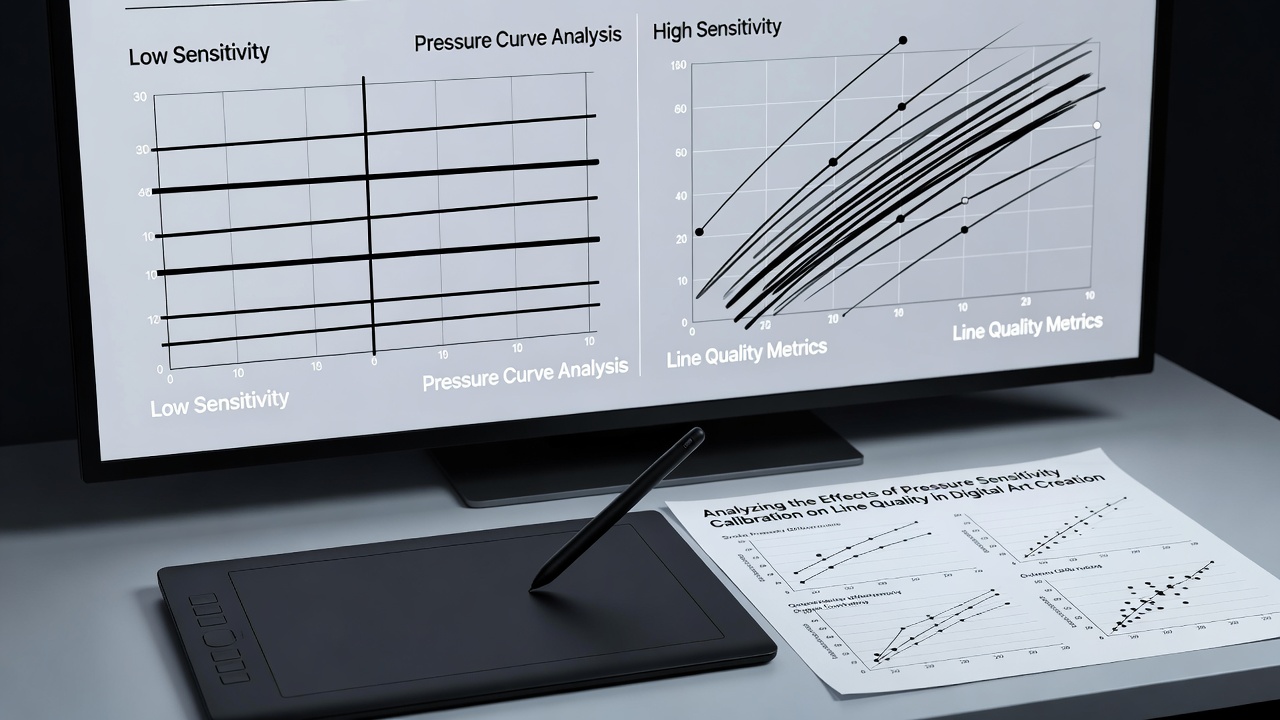
Pressure sensitivity calibration adjusts how digital drawing tablets and styluses respond to varying levels of force applied by the artist, and this process directly influences the thickness, smoothness, and consistency of lines produced in software environments. Observers note that proper calibration aligns the hardware's input range with the software's output parameters so light touches generate fine lines while heavier pressure creates bolder strokes without abrupt jumps or dead zones in responsiveness.
Understanding Pressure Sensitivity Mechanisms
Digital art tools rely on sensors embedded in tablets and pens to detect pressure levels typically ranging from 256 to 8192 levels depending on the device model, and calibration maps these raw sensor values to artistic outcomes such as brush opacity and width. Researchers at institutions studying human-computer interaction have documented that uncalibrated devices often exhibit nonlinear responses where small pressure changes produce disproportionately thick or thin lines, leading to inconsistent mark-making during extended sessions.
Calibration procedures involve applying incremental pressure across the full range while the system records minimum and maximum thresholds, after which software algorithms interpolate intermediate values for smooth transitions. Those who have examined device logs find that this step reduces artifacts like line stuttering or unintended tapering, particularly when artists switch between tools or work across multiple layers in a single project.
Impact on Line Quality Metrics
Line quality encompasses attributes including edge sharpness, pressure-to-width correlation, and absence of jitter, and studies indicate that calibrated sensitivity improves these factors by minimizing variance in stroke rendering. Data from controlled tests reveal that artists using calibrated setups achieve up to 30 percent more uniform line weights across repeated strokes compared to default factory settings, according to findings shared by the Canadian Centre for Digital Media Research.
Calibration also affects how lines interact with canvas textures and brush dynamics because the system learns to distinguish intentional pressure shifts from environmental noise such as hand tremor or surface vibrations. Experts tracking performance metrics observe that properly calibrated devices maintain line continuity even at high zoom levels where pixel-level precision matters, whereas miscalibrated ones introduce visible steps or gaps that require manual correction later.
Calibration Techniques Across Hardware Platforms
Manufacturers provide built-in utilities that guide users through a series of presses at different force levels, and third-party applications extend this capability by offering finer control over curve shapes and dead zones. In October 2026, several tablet models introduced firmware updates that automate portions of the calibration sequence using machine learning to detect individual grip patterns and adjust sensitivity curves accordingly.
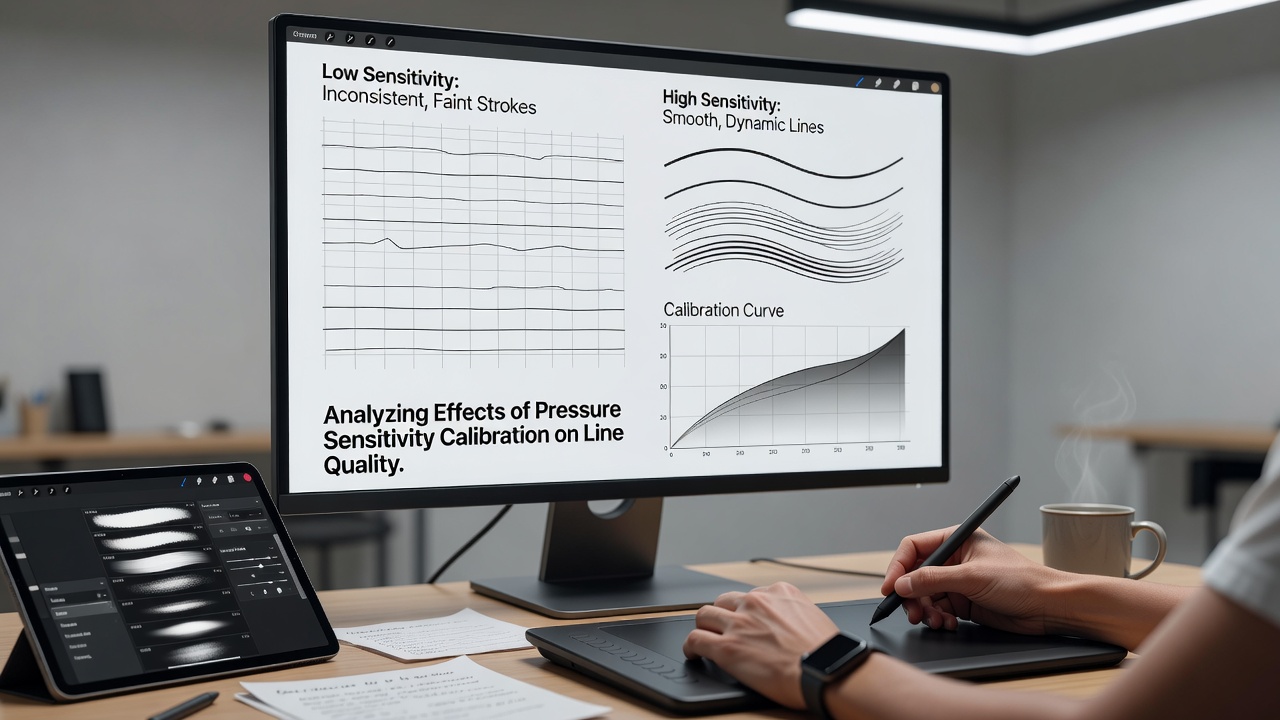
Artists working on hybrid systems that combine tablet input with screen displays benefit from device-specific profiles because each hardware combination produces distinct pressure response curves. Documentation from the Australian Institute of Interactive Arts highlights how standardized calibration protocols reduce compatibility issues when files move between different workstations or operating systems.
Empirical Observations from Digital Art Workflows
Case examples collected from studio environments show that recalibration after hardware updates or driver changes restores expected line behavior within minutes, preventing workflow interruptions that otherwise accumulate during deadline-driven projects. Quantitative analysis of stroke samples demonstrates that calibrated pressure mapping correlates strongly with reduced post-processing time since lines require fewer adjustments for consistency.
Software developers integrate calibration data into brush engines so that settings such as minimum size and hardness respond predictably, and reports from the European Digital Arts Consortium indicate measurable gains in output uniformity when teams standardize calibration routines across multiple users. Those monitoring long-term usage patterns note that periodic recalibration accounts for sensor drift caused by wear or temperature fluctuations, maintaining performance standards over months of regular operation.
Conclusion
Pressure sensitivity calibration serves as a foundational step that shapes the reliability of line production in digital environments by aligning hardware input with artistic intent. Continued refinement of calibration methods supports consistent results across evolving device ecosystems while data from ongoing research continues to inform best practices for both individual creators and collaborative studios.