Riley Otto · 22 September 2026
Navigating Palette Organization Strategies for Consistent Color Harmony Across Multi-Layer Projects
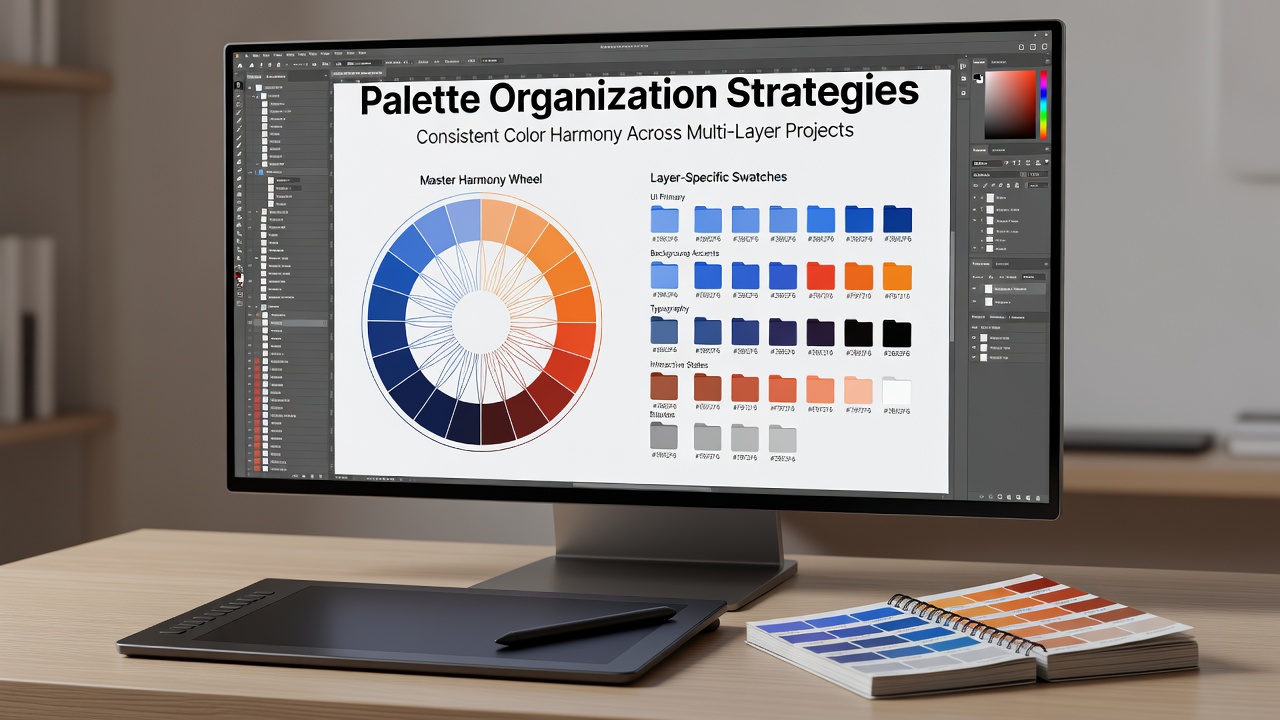
Digital artists and designers manage extensive color sets when working across multiple layers in complex projects, where palette organization directly supports visual consistency and reduces errors during revisions. Research from the International Color Consortium shows that structured palettes help maintain harmony by grouping hues according to temperature, saturation, and value ranges, allowing quick access while preserving relationships between primary, secondary, and accent colors throughout iterative edits.
Core Principles of Color Harmony in Layered Workflows
Color harmony emerges when selections follow established relationships such as analogous, complementary, or triadic schemes, and these principles scale effectively when palettes are segmented by project phase. Observers note that separating base tones from highlights and shadows within dedicated swatch groups prevents unintended shifts as layers accumulate, especially in illustrations that span dozens of adjustment passes. Data from design industry reports indicate that teams using categorized palettes complete revisions 30 percent faster because reference colors remain isolated from temporary mixes.
Those who study digital workflows find that value-based organization often outperforms hue-only systems in multi-layer environments because it aligns with how rendering engines composite opacity and blending modes. A single palette might contain separate rows for midtones, deep shadows, and specular highlights, each tagged with numerical identifiers that match layer names or group folders. This approach keeps adjustments localized so changes on one layer do not cascade through unrelated elements.
Practical Methods for Building and Maintaining Palettes
Many professionals begin by sampling from reference images or mood boards and then exporting those samples into reusable libraries that software can load across sessions. Export formats that embed metadata, such as ASE or ACO files, allow palettes to travel between applications without losing order or grouping labels. Experts recommend locking foundational swatches early so they serve as anchors while derivative colors are generated through tint, shade, or desaturation operations.
Layer naming conventions that mirror palette structure further reinforce consistency; a foreground element layer set might reference the exact swatch group used for its local color decisions. Automated scripts can scan open documents and flag any colors that fall outside predefined tolerance ranges, surfacing discrepancies before final renders. In September 2026 several painting applications introduced improved library sync features that push updated palettes to team members in real time, reducing version conflicts on shared files.
Handling Complexity Across Large-Scale Projects
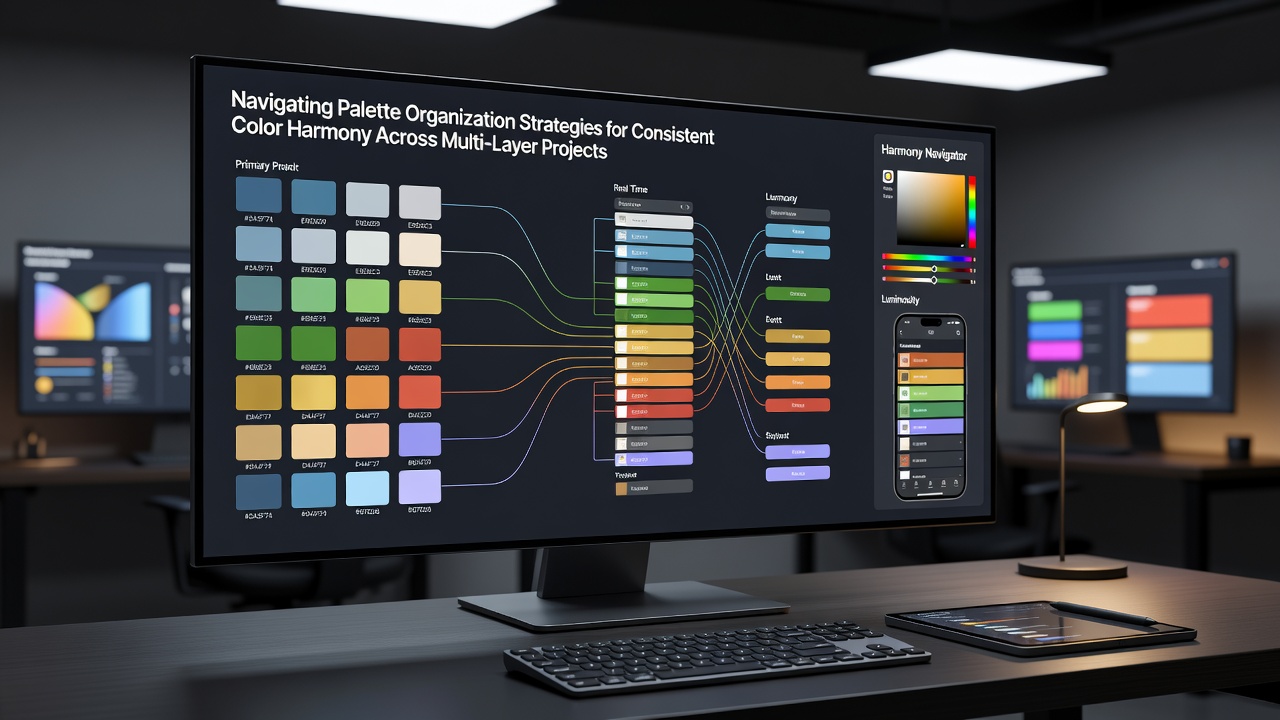
Projects exceeding fifty layers benefit from hierarchical palette systems that nest sub-palettes under broader categories such as environment, character, and effects. Each sub-palette can inherit rules from its parent while permitting local overrides for specific lighting conditions or material properties. Research indicates that this nesting mirrors the folder structures already used in layer panels, creating a parallel mental model that speeds navigation during late-stage polishing.
Version control for palettes themselves has become standard practice; saving dated snapshots allows rollback when an experimental harmony direction fails to integrate with existing layers. Color management profiles attached to each palette ensure that screen-to-print transitions preserve intended relationships, particularly when projects move between different display calibrations or output devices.
Integration with Software Tools and Automation
Current applications provide native palette panels that support drag-and-drop reorganization, search by hex value, and bulk export of selected swatches. Third-party extensions can generate complementary palettes algorithmically from a seed color and then insert the results directly into the active document's library. Observers note that these tools reduce manual calculation while still requiring human oversight to confirm the generated colors meet project-specific mood requirements.
Teams working across regions often reference standards published by organizations such as the Colour Group of Great Britain to align terminology and measurement methods. Similar guidance appears in reports from the Design Institute of Australia, which emphasize documentation of palette decisions for long-term project handoff.
Conclusion
Effective palette organization in multi-layer projects rests on systematic grouping, consistent naming, and regular synchronization between visual assets and layer structures. When these practices are followed, color harmony remains stable even as projects grow in scope and involve multiple contributors. Continued refinement of both manual techniques and software features supports reliable results across evolving digital pipelines.