Ulrich Lange · 8 September 2026
The Role of Custom Brush Engines in Enhancing Artistic Expression Within Digital Environments
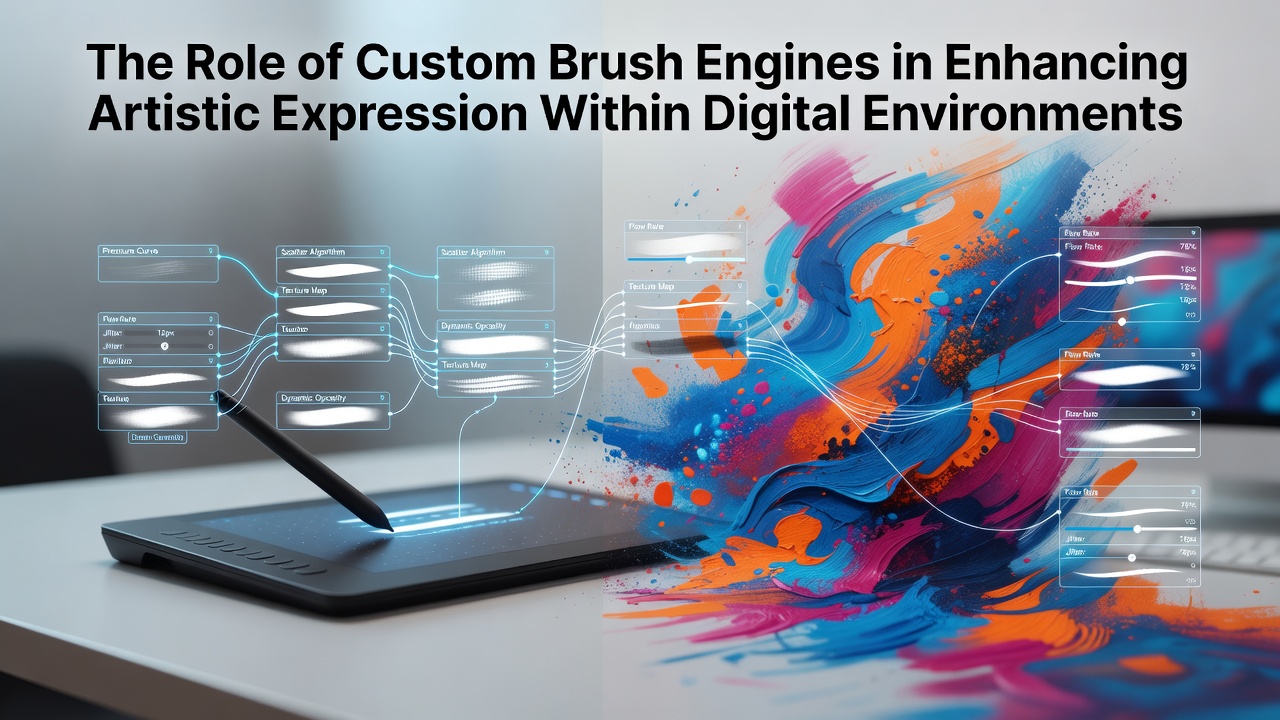
Custom brush engines form a core component of modern digital art software, allowing users to define parameters such as bristle density, paint flow, texture mapping, and pressure sensitivity that respond dynamically to input devices. These engines process stylus data in real time through algorithms that simulate physical media interactions or generate entirely new visual effects, and data from graphics research indicates they expand the range of marks an artist can produce beyond standard presets found in early raster programs.
Core Mechanics of Brush Engine Customization
Developers build brush engines around modular systems where variables control opacity curves, scatter patterns, and blend modes, while advanced implementations incorporate particle simulations or procedural noise functions that update based on stroke velocity and tilt angles. Researchers at institutions focused on computer graphics have documented how these parameters combine in layers to produce outputs that vary with each application, creating non-repetitive results even during repeated use of the same custom preset. Software platforms including open-source options like Krita and proprietary tools integrate these engines so that users adjust settings through sliders and graphs that directly influence the rendering pipeline, and studies on digital tool adoption show increased iteration rates among artists who modify engines to match specific project needs.
Integration with Input Hardware and Software Ecosystems
Stylus tablets and display devices feed positional and force data into brush engines at sampling rates exceeding 200 hertz, enabling the engine to interpolate between points and apply custom jitter or smoothing algorithms without introducing lag that disrupts workflow. Graphics processing units accelerate these calculations through parallel shader operations, allowing complex textures to render at resolutions suitable for print and high-definition displays, while figures from industry reports reveal that artists working with calibrated hardware report higher precision in replicating traditional media effects such as watercolor bleeding or oil impasto buildup. Compatibility layers in operating systems ensure that custom engine settings transfer across applications when file formats support metadata export, though certain proprietary extensions require conversion steps that preserve parameter values.
Impact on Creative Workflows Across Disciplines
Illustrators in concept art pipelines employ custom brushes to generate consistent foliage or fabric patterns that adapt to perspective changes, and data collected by design software analytics platforms shows reduced time spent on repetitive elements when engines handle variation automatically. Concept artists in film and game studios share engine presets through collaborative repositories, which accelerates team alignment on visual language while maintaining individual stylistic adjustments. In September 2026 several major software updates introduced expanded scripting interfaces for brush engines that allow integration with procedural generation tools, enabling artists to link brush behavior to scene lighting data or animation timelines without manual overrides at each frame.
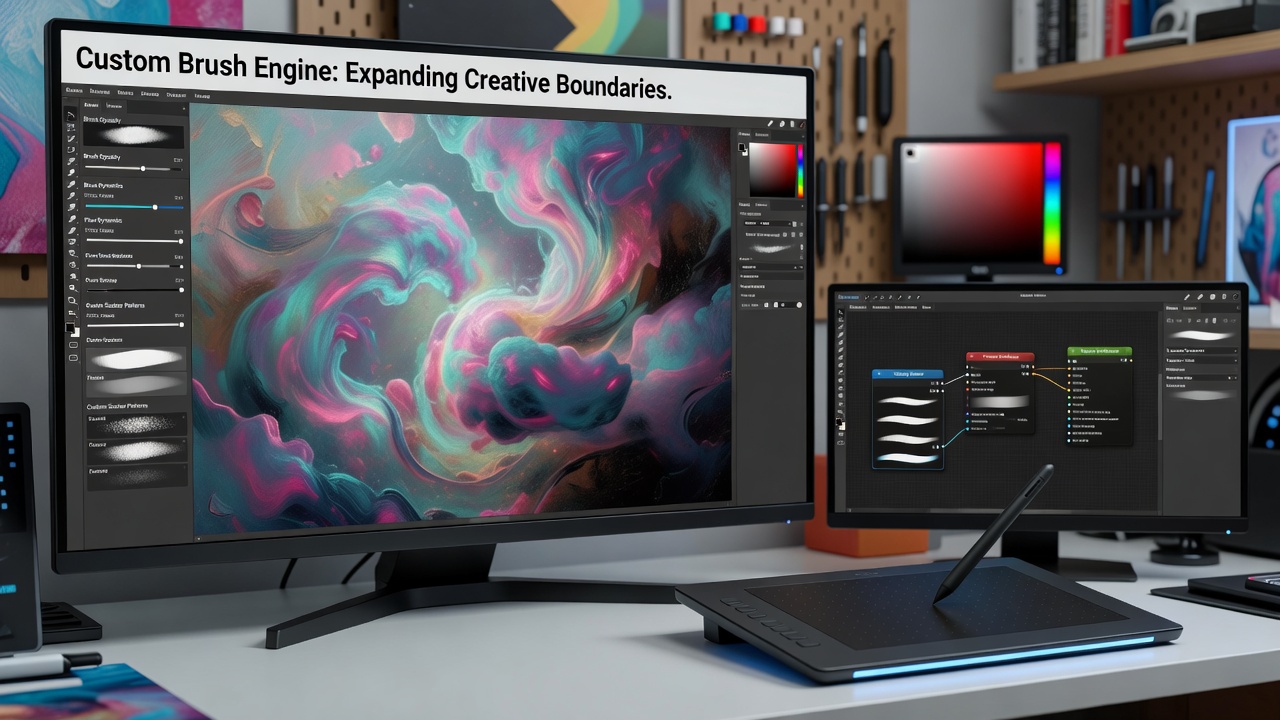
Those working in educational settings incorporate brush engine tutorials into curricula so students learn to reverse-engineer existing presets before building their own, and surveys conducted by university art departments indicate that participants who complete such modules produce portfolios with greater technical range. Printmakers transitioning to digital formats use engine parameters to mimic plate textures and ink viscosities that align with their physical processes, preserving tactile qualities in the final output files.
Technical Developments and Research Contributions
Academic papers presented at graphics conferences detail optimizations that reduce computational overhead for high-resolution brush previews, and a report from the National Science Foundation outlines funding allocated to projects that refine real-time simulation accuracy for custom engines. European research consortia have examined how machine learning models trained on traditional artwork datasets can suggest parameter ranges that approximate historical techniques, providing artists with starting points they refine through direct manipulation. Observers note that open standards for brush description files facilitate exchange between different engine implementations, reducing vendor lock-in while preserving the unique behaviors each platform offers.
Applications in Specialized Digital Art Forms
Texture artists for 3D environments rely on custom brushes to paint displacement maps that drive geometry deformation, and performance metrics shared in technical documentation demonstrate measurable improvements in surface detail fidelity when engine settings account for normal map interactions. Digital sculptors apply similar principles to stamp tools that deform meshes according to custom falloff curves, extending expressive control into volumetric domains. Animation teams utilize brush engines within frame-by-frame software to maintain line weight consistency across sequences while allowing organic variation that avoids mechanical uniformity, and case examples from production studios illustrate how these adjustments support narrative emphasis through deliberate stroke character.
Conclusion
Custom brush engines continue to evolve through contributions from both commercial developers and academic researchers, with parameter systems that respond to hardware input and integrate into broader creative pipelines. Evidence from usage statistics and technical publications confirms their role in expanding the vocabulary of marks available within digital environments, supporting workflows that span illustration, animation, and educational contexts. Ongoing refinements in simulation fidelity and interoperability standards maintain relevance as hardware capabilities advance and artist requirements diversify.